Menu
Email: info@instantscenery.co.uk
Phone: 01905 347105
Discover five proven tips for lawn care in winter. From leaf removal and aeration to feeding and careful mowing, learn how to protect and maintain your grass.
The leaves have fallen. The nights have drawn in. Winter is upon us.
But just because the days are now shorter and sunshine feels like a distant memory doesn’t mean you must lose the lushness and verdancy of your lovely lawn.
In this piece, we discuss how to care for your lawn in winter, with five expert tips to keep it in tip-top condition in time for spring.
There you were thinking that with the lack of daylight and warmth, there’s nothing to do when it comes to lawn care in winter.
Simply sit back and wait a few months for it to grow again, right?
Wrong. Take no further care of your lawn this winter, and you may find there’s not much to admire come spring.
By not giving your grass the love and attention it needs, rather than enjoying it, you could well end up spending the entirety of the warmer seasons trying to bring it back to life.
As lawn-care experts in Worcestershire, we’ve laid out five essential winter lawn care practices below to help protect your grass through the harshest months and ensure it bounces back beautifully:
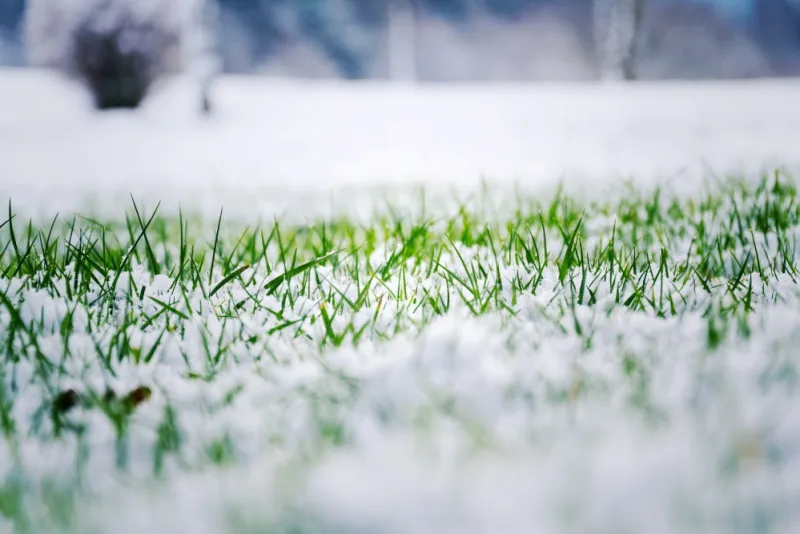
First things first. The best way to care for your lawn in winter is to keep off it whenever possible. Winter sees the most rainfall in the UK, and with the cold and lack of growth, the moisture lingers for longer. Therefore, too much footfall on your lawn is likely to rip up the turf and cause damage.
Now, you might think in frozen conditions, these rules don’t apply, but that’s actually when grass is at its most vulnerable. Frozen grass is already stressed; stepping on it causes the blades to snap. The result? Bye-bye grass. Hello mud.
Any ugly, brown patches made in the winter will not recover until the growing season. So, best to keep off whenever you can. We recommend laying a solid pathway if this becomes an issue, such as stone slabs or gravel.
Those rare times you do allow yourself to step on the grass in winter should be for a good reason, and clearing leaves is one of them. Leaving leaves or other debris scattered across the lawn cuts off airflow, traps moisture and encourages mould and fungal diseases to thrive.
Most deciduous trees will have shed all their leaves by November, which means there’s no excuse not to give your lawn a final thorough rake before winter properly sets in. After that, simply keep an eye out and clear any new debris that arrives throughout the colder months.
Waterlogging can become a big problem for your lawn if you receive too much rainfall. Saturated soil stops the grass roots from breathing, creating a perfect environment for moss and disease to develop.
If you notice puddles forming on your lawn, go ahead and grab your garden fork to spike the area at regular intervals. This process allows the water to drain and the area to aerate.
Regular aeration over winter can keep your lawn healthier, but be careful. Too much spiking into the ground with your fork can cause more damage than good. If waterlogging remains a persistent issue, it might be worth considering some more extensive landscaping and groundwork to provide a more permanent drainage solution.
Of all times of the year, winter is actually when not to cut the grass. However, often we hear the question of “how often should you cut the lawn in winter”, especially now as the climate continues to change and erratic temperatures take hold. The reality is not simple, and your answer will depend on the weather.
In some winters, you shouldn’t ever mow the lawn because it’s too cold or wet. However, in milder winters with temperatures reaching 5-10°C, the grass will still grow, and when it’s dry, there’s no reason not to.
If anything, it’s good to give it a mow to keep it healthier heading into spring.
So, if that means you’re going to mow your lawn in winter, we recommend raising the height a quarter inch (5mm) above your summer lawn care routine, and not leaving it until too late in the day. Morning or early afternoon works best, as long as the grass is dry.
Say, you’ve been monitoring the lawn and notice it starts losing its colour, with yellow patches appearing and moss developing. Well, a winter fertiliser can help restore it. Fast-acting nitrogen can encourage the last bits of growth, while ferrous sulphate will kill moss and strengthen the grass.
Ideally, you’ll limit any chemical fertilisers to an absolute minimum because they’re not good for the environment. Like with persistent drainage and aeration issues, a longer-term solution might require undertaking some groundwork or investing in landscaping services.
With an exciting garden redesign, you can improve the overall fertility of your grass by enriching the soil, boosting biodiversity and creating a healthier natural ecosystem.
Hopefully, this article has given you some valuable advice on how to care for your lawn in the winter. If you’d like a more definitive guide, we have a useful checklist designed to help you keep on top of your garden maintenance all-year-round. Take a look.
Alternatively, if you feel like you don’t have the time to follow these steps, our team are always here to help. At Instant Scenery, we’re an award-winning landscape gardening company based in Worcestershire, specialising in creating and maintaining beautiful, healthy lawns all-year-round.
From winter lawn care and drainage solutions to seasonal fertilising and landscaping, our expert team ensures your garden stays lush, green, and ready for spring.
Don’t let winter take the life out of your lawn. Get in touch and speak to a member of our friendly team.